


A World-Class Training Programme for Future Airline Pilots
Professional Aviation’s Airline Pilot Training Programme, approved by ENAC, is designed for aspiring professional pilots who wish to pursue a career with commercial airlines.
The programme combines ATPL ground school, practical flight training on a modern fleet, and instruction delivered in accordance with EASA standards for commercial aviation.

The Modular Pathway to Becoming an Airline Pilot
The Modular training pathway is designed for students who want to become professional pilots through a progressive, step-by-step approach. Each module builds on the previous one, allowing you to develop the knowledge, skills, and confidence needed for a successful career in aviation.
How it works
- Training is divided into progressive modules.
- Progress at your own pace, according to your goals and availability.
- Each stage must be completed before progressing to the next, ensuring a structured and effective learning experience
Why choose the modular training pathway?
- Greater control over your training
- Build Pilot-in-Command (PIC) flight hours progressively.
- Adapt your training pathway to your personal and financial needs.
- Make informed decisions at every stage of your training.
What you’ll study: ATPL ground school subjects
The core of ATPL ground school covers 13 essential subjects, designed to develop an airline mindset and provide the in-depth technical knowledge required for a professional flying career.
Advanced study of aircraft systems, complex onboard systems, and the technical operation of commercial aircraft.
Advanced aerodynamics and flight physics applied to commercial aviation operations.
Study EASA regulations, the Rules of the Air, and the legal framework governing commercial air transport.
Advanced aeronautical communications, ICAO standard phraseology, and communication procedures in IFR operations.
Advanced flight planning, including route calculations, fuel planning, and operational performance management.
Advanced navigation, strategic route planning, and the use of complex aeronautical charts.
Human performance in professional aviation, including human factors, Crew Resource Management (CRM), and fatigue management.
Advanced aviation meteorology and the analysis of atmospheric phenomena on a synoptic scale.
Operational procedures and regulations for commercial airline and multi-crew operations.
Aircraft instrumentation, including flight instruments, cockpit systems, and their operation.
Aircraft mass and balance, including weight and balance calculations and load distribution.
Take-off, cruise, and landing performance calculations and performance charts.
Radio navigation systems, including radio frequencies, antennas, radar, GNSS, and navigation instruments.
What Our Students Say
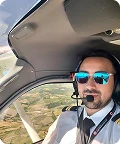
My experience at Professional Aviation Academy has been extremely positive, and I’m now approaching the final stage of my training. Looking back, I can see how much I’ve grown—not only as a pilot, but also in confidence.
What has made the biggest difference is the environment. I feel genuinely part of the Academy, both during training and outside of it. Everyone is approachable and supportive, from the flight instructors to the operations and marketing teams, creating a welcoming atmosphere where you’re encouraged to learn, ask questions, and grow.
I’d also like to mention the financing opportunities available through the Academy, which made it possible for me to begin this journey. In my personal circumstances, that support played an important role in turning my dream of becoming a pilot into reality.
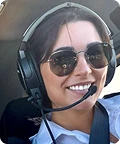
Joining Professional Aviation Academy marked a real turning point in my journey. From day one, I found a professional yet highly collaborative environment, where learning alongside fellow students and receiving continuous support from the flight instructors truly makes a difference.
You’re never alone. Every challenge is approached together, helping you grow not only as a pilot but also as a person. The programme is demanding, but that’s exactly what makes it so rewarding.
Day by day, I’ve gained greater confidence, knowledge, and flying skills thanks to the Academy’s high training standards and the constant support of the entire team. Here, you don’t just learn how to fly – you build a strong foundation for your future in aviation.
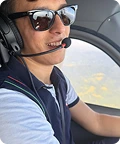
I still remember my very first day at Professional Aviation Academy. What impressed me most was the sense of calm and professionalism—it felt like stepping into a completely different world.
That first impression has never changed and was the main reason I chose to begin my training here. The flight instructors are an exceptional team who share their passion for aviation while providing constant support throughout every stage of the journey, especially during the most challenging moments.
After completing my PPL, I moved on to the Hour Building phase, which gave me the opportunity to explore incredible places from a completely new perspective while building valuable flight experience and accumulating the hours needed for the next stage of my pilot training.

Take Off Towards Your Pilot Career
FAQs
ATPL ground school covers 13 subjects, including navigation, meteorology, principles of flight, aircraft performance, and operational procedures, in accordance with EASA regulations.
The duration depends on your availability and training pace. On average, it takes around 24 months to progress from zero experience to a Commercial Pilot Licence (CPL), Instrument Rating (IR), and completion of ATPL ground school.
Yes. Every programme combines structured ground school with practical flight training, in full compliance with EASA requirements
Yes. The programme includes the Night Rating, which qualifies you to fly in night conditions.